Big Brother 2026 | Big Brother winner | literacy crisis | media literacy | reading and empathy | diverse reading | reality TV | social media algorithms
It’s Thursday night, and the housemates and the crowd outside hold their breath as they wait for the announcement they’ve anticipated for eight weeks: the winner of Big Brother 2026.
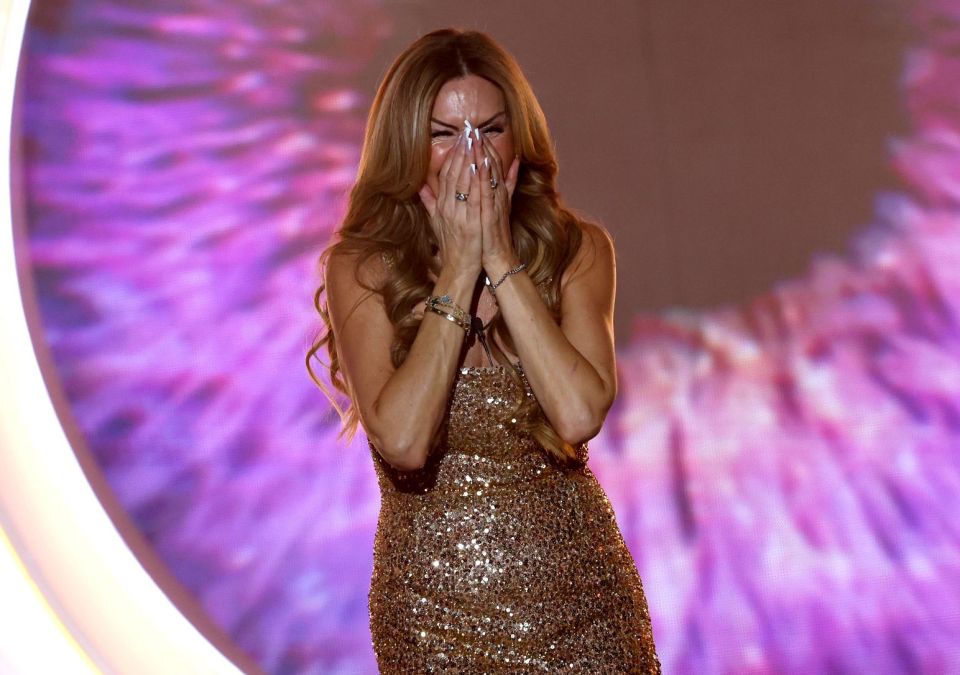
The moment the presenter announces Rochelle, a petite, middle-aged white woman with blonde hair and a gold dress, the crowd erupts into boos. Her fellow housemates sit stony-faced, with not a soul standing up to clap as they did for the runner up, Twinks. In unprecedented scenes, the crowd continues to boo and shout their displeasure at the result, to such an extent that the winner’s interview can barely be heard, even by those of us watching from home.
Keep reading to explore how Big Brother might connect to the literacy crisis, and stick around until the end for a book debut that is perfect for people interested in the toxic side of reality TV and influencer culture!
This post contains affiliate links. This means I may receive a small commission if you make a purchase through some of the links, at no additional cost to you.
So, what is the issue?
There are, apparently, two issues here.
The first is that, while Big Brother is an entertainment show, the voting became very political. In that sense, it is no surprise who the finalists were. Rather than simply being the most entertaining housemates, the two finalists were viewed as representing opposite ends of the political spectrum.
Twinks was seen as the radical leftist: an ally to the LGBTQ+ community, a feminist, and someone unafraid to have difficult conversations about change.
Rochelle, on the other hand, was seen as representing the right. She had made remarks about people’s weight and said she was initially afraid of a disabled housemate because of her limb difference. Other housemates claimed she had made racist and unacceptable comments that were not aired. She also seemed to find conversations that challenged the status quo, like the use of AI, too much.
Twinks was either loved or seen as too chatty and too ‘woke’.
Rochelle was either hated or seen as good telly and entertaining.
No doubt some viewers felt that one of these women was more aligned with their own values and voted accordingly. That was what concerned so many people. Why would your values align with someone many viewers found nasty or a bully? Others felt that aligning with Twinks meant being an attention seeker or ‘weird’. Black-and-white thinking that seems to be prevalent in online discourse.
The second issue that concerned people was the behaviour of the show’s producers and the way Rochelle’s scenes were edited. Viewers questioned why her shouting and finger-pointing during arguments did not appear to be reprimanded, while other housemates who argued with her received formal warnings. Tennis balls with messages were thrown into the house on several occasions, but the messages seemed to work in Rochelle’s favour each time. Her fatphobic comments resulted in a talk in the diary room rather than a formal warning, and she was swiftly given what is known as a ‘redemption arc’, where scenes are edited to show that a person has changed.
Her refusal to speak to Twinks when she arrived and her constant name-calling were never addressed. Supporters seemed to package it all as part of the overall ‘entertainment’, despite speaking vehemently against ‘entertainment’ from other housemates. Others admired that she didn’t play a game for the cameras – she was exactly who she claimed to be.
So how does this connect to the literacy crisis?
The inability to take the perspectives of others and empathise, or to recognise the devices that shape how we view a situation, is seen as an echo of the literacy crisis.
I’m not suggesting that Big Brother voters have low literacy. I’m talking about a wider crisis: one that includes how we engage with ideas, read narratives, consider perspectives beyond our own and question what we are being shown. The result itself cannot prove that the crisis caused people to vote as they did. What it can do is bring those wider habits into view.
Literacy is more than decoding words. It affects our access to stories, information and ideas that can help us develop perspective and think critically. England’s 2023 Survey of Adult Skills found that 18% of adults had low literacy proficiency. That figure measures people’s ability to understand and use written information; it does not measure empathy or media literacy on its own. Nor does one statistic prove that literacy in England is getting worse: the report found average literacy scores had remained stable since 2012. But it does show that a significant number of adults face difficulties with some kinds of written information.
Low literacy does not automatically make someone a bigot. But having less access to written material can make it harder to encounter ideas and perspectives that challenge your own. Reading, especially diverse fiction, is one way to do that. It can bring us into contact with other outlooks and cultures, and give us opportunities to practise understanding people whose lives differ from ours.
Research suggests that reading fiction can have a small positive effect on social cognition, including empathy and mentalising. That is not a guarantee that every reader will become more empathetic, or that reading alone can solve prejudice. It is one way of developing perspective and critical thinking, alongside the many other ways we learn from people and the world around us.
These skills matter when we read a novel, but also when we encounter news, political arguments, reality television and social media. We need to identify tone, understand complex issues and notice bias or a manipulative narrative. When we do not practise questioning what we are shown, we may be more susceptible to propaganda, ragebait and scams.
And surprise, surprise, those things can be profitable and easy for algorithms to amplify. A quick, polarising statement can get people to engage with a reality TV show or vote for a contestant, where a novel on the same topic may take a lot longer looking at the nuances of the situation, making sure complications are understood. The reader gets time to consider their stance and the position of others.
Ragebait seeks a more immediate, emotional reaction. On social media and some parts of the media, whether someone is angry or entertained may make little difference to the engagement it generates. Rage can be a powerful motivator, and ragebait is cheap to produce. An effective way to garner attention quickly before the user scrolls away.
Speaking up, online and offline
Britain is often described as a nation of ‘complainers’. But being annoyed about something is not the same as feeling able to raise it directly with the person responsible.
A 2018 Financial Conduct Authority survey found that 28% of people said they put up with situations because they lacked the confidence or know-how to speak out. That survey was about complaining, not literacy. The connection I’m making is that confidence can depend on understanding the process. Complaining may involve finding the right form, following instructions or explaining the problem in writing. A leaflet can be available and still be difficult to use. If someone struggles with the written information explaining how to make a complaint, that information may not give them the familiarity or confidence they need.
The internet changes some of those conditions. People can express their thoughts without having to face the person they disagree with. They can find people who share their views, and algorithms can personalise an echo chamber around them. That can feel validating, but it can also mean fewer opportunities to encounter a different perspective or learn something new.
With that being said, social media can sometimes provide a go-between. In the case of Big Brother, creators do daily debriefs on the show and share their opinions, often breaking down details and theories that may not otherwise have been obvious. Comment discussions can be insightful, too. In the absence of longer studies or books, this kind of content can expose people to new ideas and extra information, even if those ideas are met with resistance.
Now that the show has ended, I hope the producers will realise that people are paying attention to their methods. Over the last few days, even people who were hesitant to get involved in a ‘political’ debate either way felt that the apparent favouritism went a little too far. There is a lot of feedback on social media, and I hope it encourages people to seek out more diverse content or explore the wider topics for themselves.
So, do I think the result is a sign of the literacy crisis? Not necessarily. One reality TV result cannot prove that. But I do think the conversations around it show why perspective-taking and media literacy matter. Adding more reading to our lives, especially diverse reading, can only be a positive thing.
Speaking of books…
This recently released debut explores the toxicity of reality television and influencer culture, and I can’t wait to read it!
After Care by Divya Maniar
Publisher: Verve Books
Genre: Literary fiction

Grace is no longer famous. She sits alone in her New York apartment, endlessly watching reruns of herself on the reality TV show Speed Daters. Then, one evening, a man breaks in through her window. A rare, still-obsessed fan or a raging incel? Grace is unsure. Before she can find out, he disappears.
That same night, the world is rocked by the news that Anoushka, Grace’s on-screen rival, has taken her own life. Suddenly thrust back into the public eye, Grace is thrilled to be relevant again. Driven by a familiar desperation for love and attention, she clings to the dregs of her old life: her followers, her on-again, off-again boyfriend Cal, and her unstable influencer income.
But fame is fickle, and Grace’s image is fragile. When the fans begin to turn on her, Grace escapes with Cal to his isolated cabin. In the woods with nothing but each other, can they mend what’s broken without destroying what little is left?
Want to know more about building up your media literacy skills specifically? Check out the National Adult Literacy Agency, which has resources for improving media literacy skills. Ofcom also has information about media literacy in the UK.
Any tips for strengthening literacy skills? Drop them in the comments!
Sources
- Survey of Adult Skills 2023: National Report for England
- Cognitive effects and correlates of reading fiction: Two preregistered multilevel meta-analyses
- Financial Conduct Authority: 15 million Brits suffer in silence as they lack confidence to complain
- National Adult Literacy Agency: Questions Matter
- Ofcom: Media literacy

Not Ready For Spooky Season to Be Over? Here Are 5 Reads to Carry You Through November
Not ready to leave spooky season behind? These five reads bring horror, supernatural adventures and paranormal magic to your November reading.


Black British Booklist News – November 2026
In November 2026, The Abundant Word highlights new Black British book releases, expanding its Booklist to over 500 titles. Featured works include “Pillaging the Dead,” “Melody and Pain,” and “Heir of the Shadow.” Readers can explore the database for diverse Black British literature and submit titles for inclusion. Happy reading!

Smallie by Eden McKenzie-Goddard: A Lyrical Story of Family and the Windrush Generation
Smallie is a heartfelt, lyrical story of family, memory and the Windrush Scandal. Its vivid snapshots of life stayed with me, like walking through a family photo album with handwritten notes on the back. Read more.


The Abundant Word®
Join Us
A literary hub for diverse readers and writers.
Free
✓ Email updates
✓ New blog posts
✓ Book reviews
✓ Author interview
Supporter – £3 a month
✓ Everything in the free plan
✓ Downloadable Black British Booklist dataset
✓ Exclusive subscriber content
✓ Support the continued growth of The Abundant Word
Leave a Reply