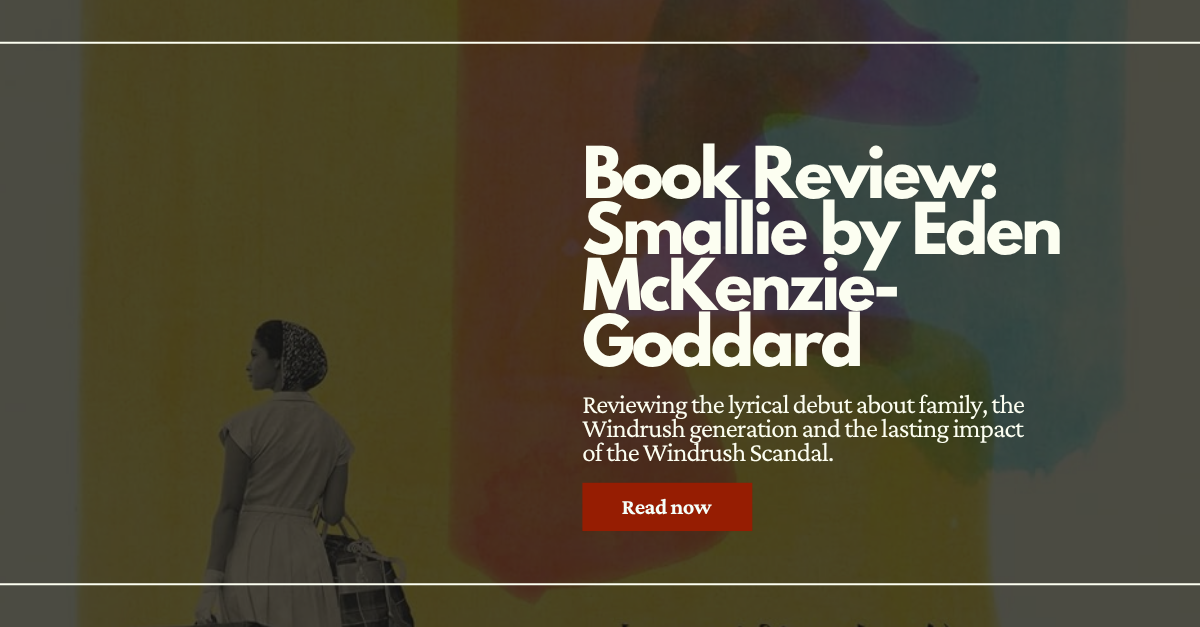
Book Review | The Windrush Generation | Black British Literature | Diaspora Fiction | Generational Saga | The Windrush Scandal | Contemporary Fiction
This post contains affiliate links. This means I may receive a small commission if you make a purchase through some of the links, at no additional cost to you.
This year feels like it has truly been the year of debuts, and I am so excited to talk about another one that has been popular since its release in May, and with good reason. It’s a fabulous choice to read alone, with a buddy or as part of a book club. I wouldn’t be surprised to see this book appear on a few literary award lists in the near future!
If there’s just one thing I’d like everyone to know about the Windrush generation for Black History Month, it’s this:
The people who arrived in the UK from the Caribbean between 1948 and 1973 were classed as British. They were part of the Commonwealth and had freedom of movement. For this reason, passports or formal residency documents were not required. That would be like asking for a passport to go from London to Manchester.
The reason why I would love this to be common knowledge is because I find that this important context tends to be missing when discourse arises around the Windrush Scandal or immigration in general.
That is why I love books that talk about the Windrush Scandal and its impact. The beauty of books is that it isn’t just about the ‘issue’ or ‘theme’ that is explored. A book can immerse the reader in the whole journey, and how it shaped individuals, not just large, nameless groups. With this perspective and empathy, we gain so much knowledge. To show injustice but also allow space for those who have suffered to be human or imperfect is no easy task.
However, I believe that this stunning debut manages that. So, my Black History Month recommendation is Smallie, by Eden McKenzie-Goddard.

The story is told across two time periods, starting in 1961 and 2017. In 1961, Lucinda travels to England from Barbados to find her toddler son’s father. In 2017, the Home Office threaten to deport her to a place she hasn’t seen in almost 50 years. Her children, desperate to save her, realise that they have to find a mysterious man from their mother’s past called Raldo.
What grabbed my attention first of all, was that it describes what life was actually like aboard those ships, travelling to the UK. Most of us in modern times will not ever have experienced leaving your home and everything we know to go somewhere new, with weeks at sea and living in close quarters with a bunch of people in the same limbo. It was one of many immersive snapshots of life that I adored in this book.
I felt like I was walking through photo albums – the type that have handwritten notes written on the back of each image to tell you more about it.
With that being said, I didn’t always like the characters or agree with them. They were imperfect and real. Lucinda, carried trauma with her to England, and met another type of trauma when she arrived. The layers behind it and how she made her decisions were therefore somewhat understandable, even if they frustrated me.
There was no doubt in my mind that despite everything, she was a good mother, but it was evident that facets of trauma still remained based on how her children and grandchild responded to her predicament in 2017. I did care more about Lucinda’s story in the past than I did that of her children. But this is because I didn’t get as much time to know them as I would have liked – the book would have to be double the size to satisfy me on that count, probably. I would love it if there were more books to explore their stories, especially Reggie and Jevan (pretty please?).
At 224 pages, Smallie is a fairly short read, but an engaging and memorable one.

I was particularly fascinated by the impact of a certain feature: the lack of speech marks.
I have come across this feature in other books but it worked particularly well for me here.
I can only describe it as it helping this story feel not like the voice of a stranger from another island, but a hazy memory, long tucked away, returning to me in snapshots and awakening my emotions.
That is to say, I loved the style of this book. It was emotional and lyrical, filled with love and pain and history. It spoke to the place in my brain that comes before the words form.
I appreciate this story even more because it gives voice to a group who had so much snatched from them at a stage in life where they were both rooted and vulnerable. It helped me to see their resilience in the face of betrayal in a new light.
This is a heartfelt debut that reminds you of the importance of family and stories.

Readers of this title may also like The Mercy Step by Marcia Hutchinson. Check out my review here.
If you liked this review and would like to explore more Black British literature, check out the Black British Booklist, where you can discover and buy hundreds of books by Black British authors!

Posts


The Abundant Word®
Join Us
A literary hub for diverse readers and writers.
Free
✓ Email updates
✓ New blog posts
✓ Book reviews
✓ Author interview
Supporter – £3 a month
✓ Everything in the free plan
✓ Downloadable Black British Booklist dataset
✓ Exclusive subscriber content
✓ Support the continued growth of The Abundant Word
Leave a Reply