Hey Wordies!
I’m so excited to kick off this new series, ‘Five Questions, One Author’, where we spotlight new, indie, and underrepresented authors. I wanted a way to celebrate the amazing talent in our writing community, and what better way than to hear straight from the authors themselves?
Each post in this series features the same five questions, giving these writers the space to share their stories, inspirations, and lessons learned. I’ve had the pleasure of reading the work of or even working with many of these authors, so I can’t say enough good things about their books, so I am delighted that they agreed to be featured and thank you to all the authors who are taking part.
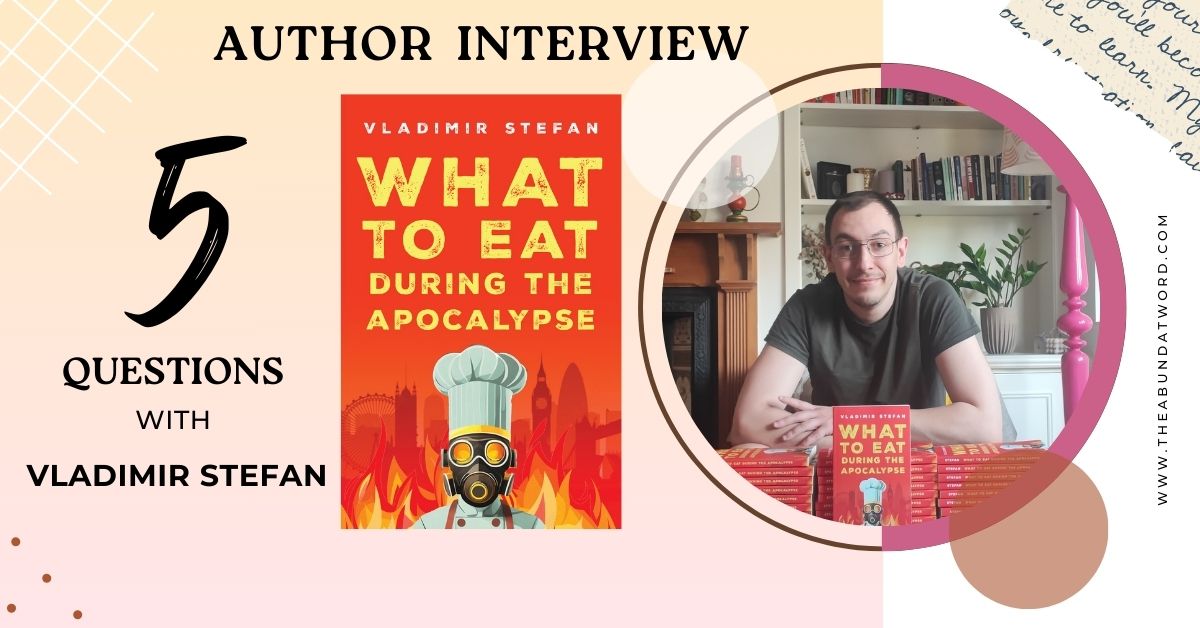
To start us off, I’m delighted to introduce Vladimir Stefan, author of What to Eat During the Apocalypse. Vladimir’s unique mix of humour, satire, and heartfelt moments make his book unforgettable, and I can’t wait for you to get to know him a bit better.
So without further ado, gather round Wordies, let’s begin!
This post contains affiliate links. If you click any of these links and make a purchase within a certain timeframe, I may earn a commission, at no extra cost to you.

- What inspired you to start writing, and what led you to choose self-publishing or working with an independent/small publisher?
I would answer with some soppy emotional answer if I had one, but the honest one is boredom. I was recently unemployed after leaving my last corporate finance role, and was trying to fill my time up with something more productive, having some unresolved grievances with a system that I was growingly disconnected from. I wanted to channel that disconnect in my character Dom, an average bloke trying to get by, convinced of his purpose and role in society until the unexpected happened and he’s forced to introspect.
I did dabble with writing in my teenagehood. I used to write poetry and hip-hop music and for a few years I thought I would follow that. Unfortunately, such is life sometimes that you are forced to fall into a pattern for a sure buck, and you start ignoring whatever calling you’ve been having that made you happy.
In terms of self-publishing versus traditional, for me there were two reasons – stylistic in owning my manuscript and the language of the characters, and secondly impatience. I wanted to get the story out to be judged by people rather than literary agents. Knowing the process of querying is tedious, difficult for certain genres and often unresponsive I chose to go self-published and treat this “author experiment” as something solely in my control. That doesn’t mean I won’t ever go traditional, of course, but I wanted my first few novels to be out there, relying on my own capabilities to market and connect with readers seeking my stories.
- How does your personal background or identity influence your writing, and how do you incorporate that into your stories?
I always saw myself as unfit for the current parameters of society. Whether I empathise too much with people ignored by the social order, or simply disapproving of the current status quo, I felt like an observer of society as much as a member. My rebellious teenage years were filled with writing anti-systemic or anti-capitalistic music, creating the foundation for my later writing. After years of being a mechanical part of the system, I found myself needing to be true to my values again.
My stories are about misfits, and for the most part they tend to caricaturize society. I love writing satire because I find humour a worthy vehicle to transport strong messaging. There is power in laughter and entertainment. It helps us feel like a collective and for the brief moment we are laughing together we are joined in the most basic form of empathy. This in turn, allows for deeper exploration of places or topics we could have more in common as individuals with different upbringings and values.
- What has been the most rewarding part of your writing journey so far, and what might you do differently in the future?
My readers! To have strangers from all over the world tell me that my story entertained them, made them laugh or ponder deep topics makes me feel all fuzzy inside. The ability to connect with like-minded individuals, since my stories are quite heavy on the messaging, is my highlight. In the past year or so I discussed current events with my followers, we “meme’d” politics, and we supported each other’s social causes.
When I published my first book, I deep dived into a world I was not that much familiar with. Now, I feel more connected and attuned to it, so naturally, my second book will not repeat some of the mistakes of the first one – impatience, thin-skin and high expectations.
- What advice would you give to new or aspiring indie authors?
Go for it! There is no perfect book and no perfect author. If you’re proud of what you created, if people tell you it is good, trust them and go with it. Overthinking is the killer of creativity and there is so much beauty and originality in rough edges. I don’t want to go all cliché with motivational quotes here, I leave that to Pinterest. I just want people to believe in themselves just enough to say, “F**k it” and GO FOR IT. We have one life, do what makes you happy and if writing does that, share your happiness with the world.
- Can you tell us about your latest book and where readers can find it?
My debut (and my bestseller, since it’s my only book…) is called What to Eat During the Apocalypse. If you’re reading this interview and you found my style down to earth relatable, that’s what my book is about. An average person with a sassy cat living in a dystopian London is shifted into an unexpected role as an apocalypse unravels. It’s got plenty of dead-pan humour, relatable characters and heart. Community and food go hand in hand through the story and I’m sure each of you will find something to relate in it. The timing couldn’t also be better since I’m in the editing stages of What to Eat After the Apocalypse, the slightly anticipated sequel, expected in the new year.
The book is available on the usual platforms and online retailers, from Amazon, to Waterstones and some local bookstores as well. People can order signed copies from my website if they think I will be famous one day and they’ll be able to resell my book to make up for a deposit on a house.

About the Author:
Vladimir Stefan was born in 1994 in Bucharest, Romania and moved to the UK for studies in 2013. His writing journey began in his younger years as a poet, followed by writing and performing hip-hop music. The themes of inequality and injustice have always moved and motivated him, and they are ever present in his debut title What to Eat During the Apocalypse. In his spare time, he enjoys cooking and forever seeking his cat’s affection.
Website: https://www.vladimir-stefan.co.uk and Medium https://www.medium.com/@VladimirStefan
Amazon link for book: What to Eat During the Apocalypse eBook : Stefan, Vladimir: Amazon.co.uk: Kindle Store
Thanks so much for reading! I hope you will take some time to support Vladimir and his work. If you enjoyed this interview, please remember to subscribe so that you you don’t miss the next interview! And as always, dear Wordies, have an abundant day!


The Abundant Word®
Join Us
A literary hub for diverse readers and writers.
Free
✓ Email updates
✓ New blog posts
✓ Book reviews
✓ Author interview
Supporter – £3 a month
✓ Everything in the free plan
✓ Downloadable Black British Booklist dataset
✓ Exclusive subscriber content
✓ Support the continued growth of The Abundant Word


Leave a Reply